 Stichting verfilming japanse burgerkampen schrijft:Onze film lijkt goed te zijn ontvangen. Maar op enige Indische blogs wordt – soms nogal heftige – kritiek geleverd. Deze sterk verschillende reacties zijn alleen te begrijpen als een onderscheid wordt gemaakt tussen de beoordeling van de film op zichzelf en het karakter van de ‘Indische Middag’ op 11 januari, waar de première van de film werd vertoond.
-
...........𝓘𝓷𝓭𝓲𝓼𝓬𝓱𝟒𝓮𝓿𝓮𝓻
Berichten van het heden, maar ook uit het verleden21 jaar !!


- Het archief van Indisch4ever
is best wel te filmen !!
................... ...................
.......... Bekijk ook
de archipelsite
met honderden topics.
Zoekt en gij zult vinden. ! -

Indische portretten
ingezonden door de lezers.
-
 Thomson
 Nassauschool Soerabaja
 Depok
Depok


 Wie is deze familie
 Wolff
Wolff
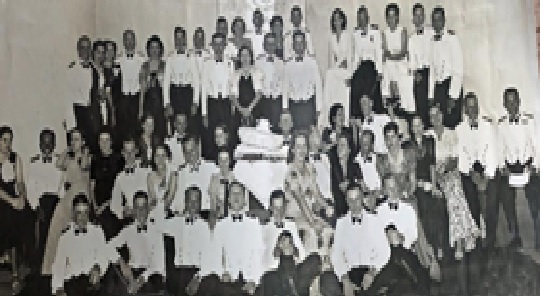 Tankbataljon Bandoeng 1939
 Is de bruid Günther?
 Wilde en Waldeck
 Brouwer en Hagen
XXXXXXXXXXXXXXXXXXXXXXXXXXXXXXXXXXXXX
XXXXXXXXXXXXXXXXXX
Brouwer en Hagen
XXXXXXXXXXXXXXXXXXXXXXXXXXXXXXXXXXXXX
XXXXXXXXXXXXXXXXXX
 Kerst 1930 a/b Baloeroan naar Indië
XXXXXXXXXXXXXX Bertha Lammerts van Bueren-de Wit
XXXXXXXXXX zwieten 214
 Bisch
Bisch
!!!!!!!!!!! Detachement Verbruiksmagazijn,
Hollandia
Detachement Verbruiksmagazijn,
Hollandia
van Hall
Smith

Emy Augustina

Detajongens

von Stietz

de Bar

Soerabayaschool ca 1953

Wie zijn dit ?

Damwijk
Klein

IJsselmuiden

van Braam

Zuiderkruis
Foto

Koster

Versteegh

Baume

Falck

Boutmy

Otto
oma Eugenie Henriette Smith
Meliezer-Andes

christelijk lyceum bandoeng
christelijk lyceum bandoeng
Saini Feekes

Mendes da Costa

Anthonijsz

Bromostraat
Wie?

Tambaksari/Soerabaja-1946

Ornek
van Dijk

.Haacke-von Liebenstein

Theuvenet

Sollaart
Berger-de Vries

Foto's gemaakt door Henrij Beingsick

Augustine Samson-Abels

Samson
Huygens
Hartman

Otto en Winsser

Marianne Gilles Hetarie
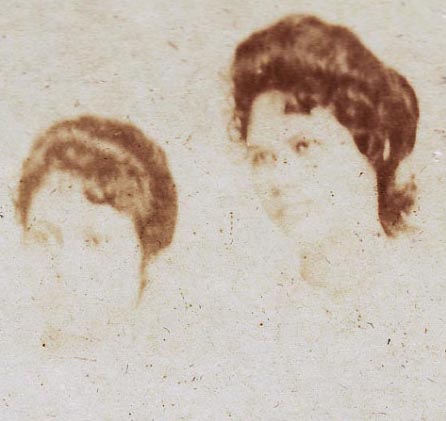
Constance en Pauline

Versteegh
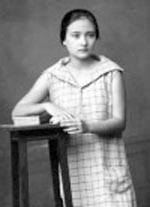
Lotje Blanken

Charlotte Hooper
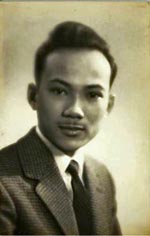
John Rhemrev

Schultze
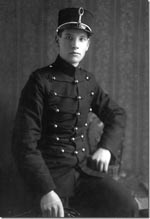
W.A. Goutier

Otto-Winsser
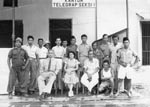
Bastiaans

Verhoeff
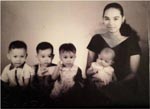
Beisenherz
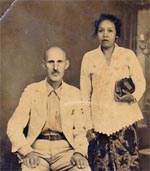
Stobbe
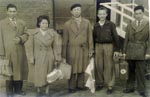
Wendt-van Namen
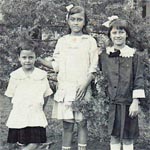
Harbord

Pillis-Reijneke

Nitalessy-Papilaja
Reijneke

Oertel-Damwijk
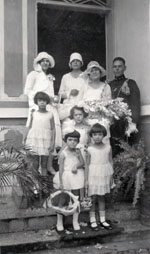
Bruidspaar te Semarang

Daniel

Krijgsman

van Dun
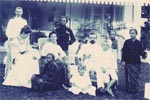
Ubbens en van der Spek

Kuhr
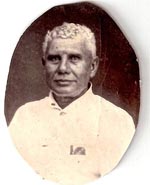
Oertel
Nijenhuis-Eschweiler
Wie ben je

Philippi-Hanssens

Tarenskeen-Anthonijsz

Hoorn-Dubbelman

Mendes da Costa

Palembang























 Indisch4ever
Derk, merci voor de correctie over de foto….
Zoals ik eerder uitlegde, mij lijkt het dat 3 indo’s geen juiste afspiegeling is van de werkelijke aantallen …
De stichting hoopt in augustus de film op de Nederlandse TV te krijgen.. 15 augustus ?
Nog een reactie op Blauwvogeltje van 21 januari 23:07 uur
Ik citeer: “Ik heb de film niet gezien,” … “had ik de indruk dat indo’s te weinig in beeld waren”
Ga die film zien! Hij draait op 1,2,3 februari in Hilversum zie http://www.japanseburgerkampen.org, klik op Vertoning “Het Jaar 2602”
Citaat: “Ik ken geen cijfers van een deskundig onderzoek.. Ik doe maar nattevingerwerk” … “20 á 40 %?”
Dat vraagteken is terecht. Ikzelf heb nergens statistieken gezien en waag mij niet aan ongefundeerd nattevingerwerk.
“Dan had je van de 19 geinterviewde kampkinderen 4 tot 7 indo’s moeten hebben.”
U wordt goed bediend, het waren er tenminste drie. Ik herhaal: ga die film gewoon zelf zien!
Ik reageer op Blauwvogeltje 21 januari 23:07
De geplaatste foto uit het pdf bestand is van enige jaren VOOR de oorlog, slaat niet op een jappenkamp. Mij zijn geen foto’s bekend uit jappenkampen tijdens de Japanse bezetting – of het zouden propagandafoto’s moeten zijn.
Ik heb de film niet gezien, maar uit de reacties van mensen die de film zagen te Amsterdam, inclusief een journalist van het
Reformatorisch Dagblad… had ik de indruk dat indo’s te weinig in beeld waren en dat de filmmakers en de voorzitter van de stichting het aantal indo’s in de burgerkampen onderschatte..
Deze reactie van de stichting bevestigt die eerste indruk..
100.000 burgergeinterneerden, 42.000 militaire geinterneerden (steeds meer ook burgers in die powkampen)
Hoeveel van die 100.000 was indo?
Ik ken geen cijfers van een deskundig onderzoek.. Ik doe maar nattevingerwerk:
tussen de 20.000 en 40.000 ? = 20 á 40 %?
Dan had je van de 19 geinterviewde kampkinderen 4 tot 7 indo’s moeten hebben.
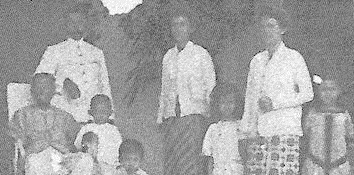
Deze foto uit een jappenkamp staat in in een pdf-file van de stichting verfilming japanse burgerkampen .
Ik tel 6 of 7 indokinderen van de 20 ? Dat illustreert dan wel mijn schatting. (ook een blond kind kan best nog wel indo zijn)
—-
Dit schreef het Reformatorisch Dagblad :
“”….In de film komen alleen Nederlanders aan het woord (totoks) en vrijwel geen gemengde Indische Nederlanders (Indo’s). Kritiek hierover snapt Van der Dussen, maar volgens hem stopten de Japanners alleen de Nederlanders in de kampen en bleven de bruinere Indische Nederlanders er buiten. ….””
——-
Jammer dat de woorden van van der Dussen niet letterlijk zijn weergegeven en van der Dussen niet duidelijk genoeg toelicht of ontkent in het verweer op de website van st. verfilming .. Want de bewering lijkt me indoblind… dwz geen indo’s kunnen zien.
Wat de stichting zei dat de aankondiging omschreven als “Indische middag” een te grote verwachting schiep bij indo’s die immers een ander opvatting hebben over Indisch lijkt me wel juist.
Maar is het verschil hier dan indo-totok ?
Of is het meer Indische Nederlander versus niet Indische-Nederlander.
Wel een band met Indië versus geen tot minder band met Indië..
Wie kan hem helpen? E-mail: oudraadr001@hawaii.rr.co
From: “Rolf Oudraad” <oudraadr001@hawaii.rr.co Sent: Sunday, January 18, 2009 2:42 AM
To:
Comment to Pig Basket Affair/Atrocities #11
This testimony comes from Yvonne Patiwaal, who is presently 82 Years old.
Her mother-in-law that she was referring to is: Charlotte “Lot”
Patiwaal-Pereira who was married to Maximilian Patiwaal who was arrested
and never seen again. Also mentioned in the testimony was my
Grandfather’s name, “Jose Pereira”, a brother of Charlotte
Patiwaal-Pereira. Jose Pereira had a son, my uncle, “Francisco Alvarez
Pereira” who is now deceased, and also, a daughter, my mother, “Vera
Yolanda Oudraad-Pereira.” From my Mother’s testimony, on the morning
that the Kempeitai came to their family home, my mother already awake at
the time, heard knocking at the back door, opened the back door of their
house to be confronted by a Japaneses soldier, who asked for the
whereabouts of her father. My mother who was only five years old at the
time answered back, indicating that her father was still asleep. The
soldier ordered my Mother to show him her father’s bedroom. My Mother
began to knock at the bedroom door and spoke in Dutch awakening her
father, when all of a sudden she was slapped in the face by the soldier
and told her not to speak in Dutch anymore, but to speak in Indonesian.
Startled, my Mother began to cry. With the sound of my Mother crying,
her father opened the bedroom door to investigate, only to be met by the
soldier. Still in his boxer-shorts and pajama shirt, my Grandfather was
dragged out of the house and that was the last that my Mother ever saw of
her father alive. All of the other Pereira men in family that all lived
in Bandjermasin were also taken away except for a few that happened to be
away at the time. Albert Pereira, my mother’s uncle, was later hidden by
a Sultan. Wim Fiorani, a cousin of my Mother, was a KNIL Military
Officer/Doctor and was also away and survived the war. Another Pereira,
was later after the war an Army General placed in charge of Batavia by
the Dutch Government. There are still other Bandjermasin Pereiras alive
to this day and they were descendants or are the children there of. Of
course the last names have changed for the females, but are non the less,
a part of that long PEREIRA FAMILY history.
To add to this, the Pereira Family originated from Macao, China where
their family was Governor to Macao since the 1600s. And before that,
from Portugal of course. In the mid 1700s, three sons were sent to
Indonesia from Macao. One to Borneo and two to Java. Other Pereira
family members went-on to Singapore. Somehow, all the Pereira Family
from India to South East Asia are all family.
I hope that someone will read this and reply. There’s a chance that we
may have something in common and you may never know–we may be family.
Aloha,
Rolf Oudraad
Mililani, Hawaii
===================================================== Eyewitnesses
Pig Baskets Atrocity
No 11
Concerns Pig Baskets Atrocity
I am married with a man from Banjermasin; the whole family-in-law is from
Bandjermasin in Borneo. I am 82 years old, I am as from my 22nd year war
widow from Max Patiwaal, born in Banjermasin on the 22nd of January in 1918.
I haven’t witnessed this pig basket affair but I can tell what has happened
in Bandjermassin.
In Bandjesmasin was a Japanese dentist who directly when the war in the
Netherlands Indies broke out, became a Japanese general, he had his uniform
with him.
So when the Japanese entered Bandjermasin, he became the head of this town.
Before the was he was a good acquaintance and dentist from the family
Patiwaal and Pereira. As soon as he was in power he had all the men and
boys been interned. As also my father-in-law and his brother. And also the
brother (José Pereira) of my mother-in-law was interned.
When my mother-in-law wanted to visit her husband, she went to her old
acquaintance and dentist and if she could visit her husband and the other
family members.
The Japanese dentist told her: “Soedah boeang laoet” Already dumped into
the sea.
Later on my mother-in-law (the only one who survived from the family
Patiwaal’s and the Pereira’s) that all the prisoners were pushed into pig
baskets and been thrown into the sea. This story comes from my
mother-in-law, she told me this before she died.
The whole family has been exterminated.
My husband died when he was 25 years old in the camp Maoemere on Flores;
according the Japanese from dysentery. His friends who have brought me his
belongings, told me that the ill prisoners of war were locked up in pig
baskets laid on the beach.
By ebb tide they were laying in their defecation and by high tide everything
was all clean again, all by itself.
The name of the Japanese dentist is probably know, he was the only dentist
in Bandjermasin
from: http://www.dutch-east-indies.com
Dear Mr Oudraad,
On “indisch for ever’ I saw your story about you grandfather Pereira.
I am afraid I cannot help you in this.
But I have another question.
You wrote Dr Wim Fiorani, your mother’s cousin, was a medical doctor and survived the war. I hope you have some more information for me.
A dear friend of me is looking for her sister, Erica Vogelzang. She was born and adopted in January 1950. Your cousin helped with the adoption, or maybe he adopted the baby himself.
The baby was adopted because her father died in an accident in December 29th 1949. Her mother had 5 children and was weak. She had to find an occupation to look after he other children.
I really hope your cousin had some documentation about this adoption.
I hope you can help me. Please let me know.
I would be very grateful,
Yours sincerely,
Jacqueline Raeven
Jacqueline,
Try to email him: oudraadr001@hawaii.rr.co
Or ,post a message to him at this site: https://www.facebook.com/groups/old.dutch.indonesian.community/